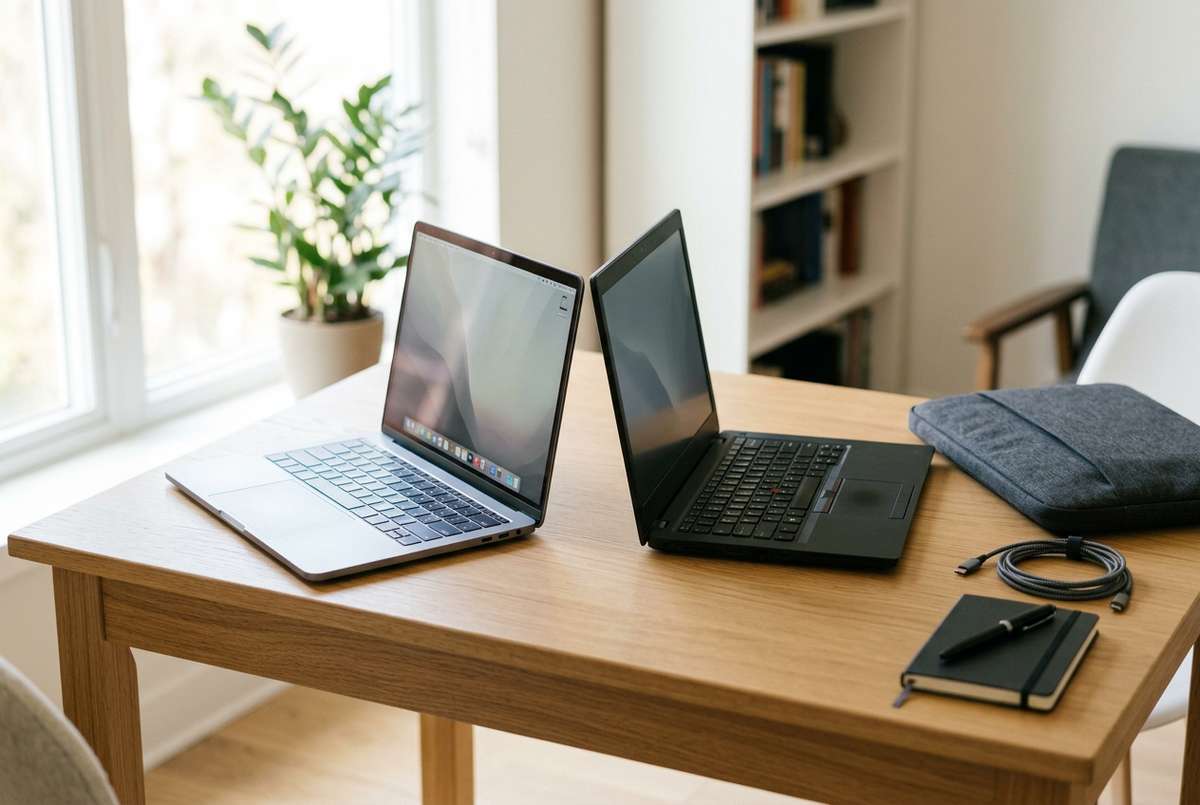
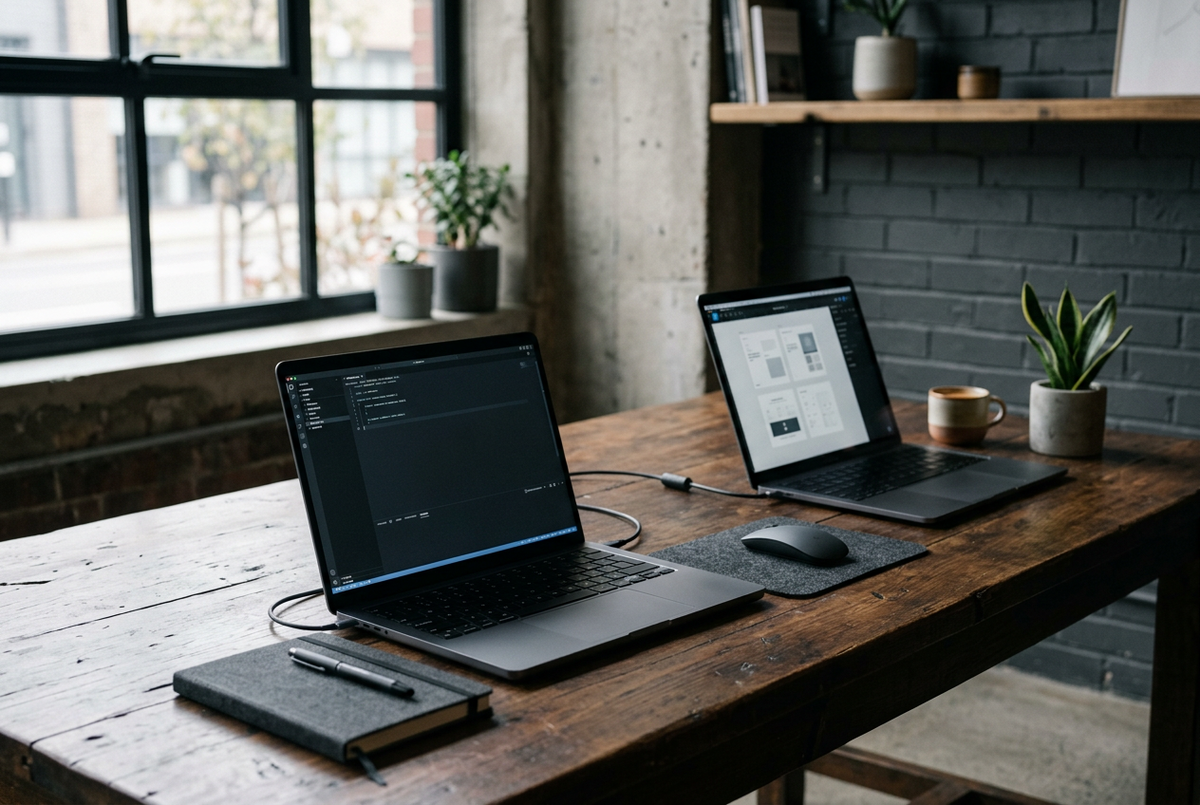
HP and Lenovo are two of the most popular laptop brands in the UK, and between them they cover almost every type of buyer, from students and home users to professionals and gamers. Neither comes out on top in every situation. The right choice depends on how the laptop will be used, the budget and which strengths matter most to you.
This guide compares HP vs Lenovo across the things that separate them day to day: build and durability, keyboards, displays, performance and battery life, followed by a breakdown by use case. It then covers how the refurbished option changes the comparison, particularly for buyers working to a budget.
How HP and Lenovo Compare
HP leans into design, display quality and variety. Its range runs from the budget Pavilion through the premium Spectre and Envy lines, with a strong record for OLED screens, slim builds and 2-in-1 designs. Gaming is covered by the Omen and Victus ranges.
Lenovo is built around practicality and durability. The ThinkPad line is a long-standing favourite in business for its keyboards, build quality and reliability, while the Yoga, IdeaPad and Legion ranges cover premium 2-in-1s, everyday use and gaming. Lenovo is the larger of the two by global market share.
The table below sums up where each brand stands:
|
Aspect |
HP |
Lenovo |
|
Build and durability |
Premium Spectre and EliteBook are strong; budget models are more variable |
ThinkPad MIL-STD durability, built to last for years |
|
Keyboard and typing |
Comfortable and improved, with slightly shallower travel |
Class-leading ThinkPad keyboards and TrackPoint |
|
Display and design |
Design-led, wide OLED and 2-in-1 options |
Practical, with premium OLED on the Yoga line |
|
Battery life |
Competitive, strongest on premium models |
Consistently strong, ThinkPad endurance |
|
Gaming |
Omen at the high end, Victus for value |
Legion, strong cooling and value |
|
Value (when buying new) |
Wide selection, competitive in the mid-range |
Strong price-to-spec, especially budget and mid-range |
Indepth breakdwon below:
Build Quality and Durability
Durability is one of the areas where the two brands differ most. Lenovo's ThinkPad range is the benchmark, built with magnesium and carbon-fibre frames, reinforced hinges and military-standard durability testing. ThinkPads are commonly kept in business use for several years, which is a large part of their reputation.
HP's premium ranges hold their own. The Spectre and EliteBook lines use CNC-machined aluminium and feel solidly built, and some business models carry their own durability certification. Lower down the range, HP's budget models use more plastic and tend to show wear sooner.
Both brands build to a high standard at the top of their ranges. The clearest difference is consistency: Lenovo's durability reputation extends further down its lineup, while HP's strongest builds are concentrated in its premium and business models.
Keyboards and Typing
Keyboards are where Lenovo has a clear edge. ThinkPad keyboards are widely regarded as among the best on any laptop, with deep key travel, a firm, tactile action and the distinctive red TrackPoint for navigation without leaving the home row. Anyone who types for long stretches will feel the difference.
HP keyboards are comfortable and have improved across recent generations, though the travel tends to be shallower than a ThinkPad's. On premium models, the gap narrows. For lighter use, it is unlikely to be noticeable, but for heavy daily writing, Lenovo remains the stronger choice.
Displays and Design
HP turns the tables on displays and design. The Spectre and Envy ranges are known for premium OLED panels with deep blacks and accurate colour, and HP offers a wider choice of finishes, slim profiles and 2-in-1 convertibles. HP has the edge for media, creative work or anyone who values a polished, modern look.
Lenovo's designs are more understated, built around function rather than flair. The Yoga line is the exception, with premium OLED screens and flexible 2-in-1 designs that compete directly with HP's. Outside the Yoga range, Lenovo tends to prioritise practicality over styling.
Processors, Memory and Performance
Everyday tasks and office work lean far more on specification than on brand. Fitted with a modern processor, an SSD and enough memory, an HP and a Lenovo handle browsing, streaming, email, video calls, documents and social media identically.
Both brands build around Intel Core and AMD Ryzen processors, with the latest premium models adding Intel Core Ultra chips. 16GB of RAM is the practical baseline for running several applications at once, and an SSD is essential. The two differ slightly under sustained load: Lenovo's cooling on its business and gaming ranges tends to hold performance for longer, while HP's premium consumer models often feel responsive thanks to higher-quality displays.
Generation counts for as much as the tier. A recent Core i5 can edge out an older i7, so the chip's generation and the amount of memory on board are better guides to everyday speed than the brand name.
Battery Life
Both brands offer strong battery life on their premium and business models, but Lenovo has a slight edge for consistency. ThinkPads in particular are tuned for long, reliable runtimes, which suits all-day use away from a charger.
HP's premium and efficiency-focused models are competitive and can match Lenovo on the right configuration, though endurance varies more across its wider range. Gaming laptops from both brands trade battery life for performance, so expect shorter runtimes there whichever you choose.
Matching HP and Lenovo to How You'll Use It
A lot of the choice rests on the job the laptop is bought for. The breakdown below shows how HP and Lenovo stack up across the most common uses.
Everyday and Home Use
Both brands are an easy fit for browsing, streaming, email and video calls. HP often stands out for display quality and design at this end, while Lenovo tends to offer more memory or storage for the same money. Browse the home use laptops range to see what is available.
Work and Business
This is where both brands are strongest, and where the comparison is closest. HP EliteBook and Lenovo ThinkPad are the ranges to look at, both built for durability, security and long working days. Lenovo's keyboards and reputation for longevity are the draw, while HP counters with premium build and strong IT integration. See the full business range for more.
Study
Students need portability, battery life and a comfortable keyboard above all. Lenovo's lighter ThinkPad and IdeaPad models suit note-taking and long days on campus, while HP appeals to students who want a sleeker design and a better screen. A 13- to 14-inch machine is the sweet spot. Compare study laptops to find the right size and weight.
Gaming
Both brands have dedicated gaming lines. Lenovo's Legion is rated highly for cooling and value, while HP splits gaming between Omen at the high end and Victus for value. The GPU model and generation decide what titles a machine can run, so check that first. See the gaming range for current options.
Creative and Workstation
Creative and engineering work needs sustained power and certified graphics. Both brands run workstation-class machines: HP's ZBook and Lenovo's ThinkPad P series. These pair professional processors with certified graphics for heavy workloads such as CAD, 3D rendering and video editing. Browse workstation laptops for the full selection.
Buying HP or Lenovo Refurbished
What Refurbished Means for Your Budget
Cost is often the deciding factor between two strong brands, and refurbished can tip the balance. A refurbished laptop is a pre-owned machine that has been restored to full working order, tested and assigned a grade before it goes on sale.
Because the price comes down, the same money buys a better-specified laptop than it would new. In most cases that means stepping up from a basic consumer model into business-class hardware.
Someone who could only stretch to a plastic, entry-level machine when buying new can instead pick up a ThinkPad or EliteBook with a metal build, a faster processor, and more memory, for a comparable or lower outlay. When the budget is set, this is the simplest route to a stronger laptop for the same spend.
HP and Lenovo Refurbished, Side by Side
The two brands line up closely here. The HP EliteBook 830 G8 and the Lenovo ThinkPad L14 Gen 3 are both 13- to 14-inch business laptops with comparable Intel processors, 16GB of RAM and SSD storage, available refurbished at a similar price point.
The choice between them comes down to keyboard feel, screen size and cosmetic grade rather than performance. The ThinkPad leans on its keyboard and durability, while the EliteBook offers a slightly more premium finish.
Battery Health
On any pre-owned laptop, the state of the battery counts for more than its original specification. Orbit365 checks every battery against a minimum capacity threshold and replaces any that fall short, so it is rated on its current health rather than its age.
Refurbished Grades
Every laptop is graded for cosmetic condition before listing, and every grade passes the same hardware testing:
-
New Sealed Box - unused and factory sealed
-
New Open Box - unused, packaging opened, all accessories included
-
Platinum - like new, no visible cosmetic marks
-
Gold - minor signs of use, excellent value
-
Silver - visible wear, fully functional and most affordable
What Comes as Standard
As a Microsoft Authorised Refurbisher, Orbit365 supplies every HP and Lenovo laptop with a clean, licensed copy of Windows 11, a 12-month warranty, 30 days of free returns and free tracked delivery. Full detail on cosmetic condition is on the grading page.
So Which Should You Buy?
Across the board, the two brands finish close together, and neither is a wrong choice. Which way you lean comes down to the priorities that matter most to you.
Lean towards HP if:
-
You want the best display quality and a more premium, modern design
-
You prefer a 2-in-1 or a wider choice of finishes
-
You want strong everyday performance with a standout screen
Lean towards Lenovo if:
-
You type for long stretches and want the best keyboard
-
Durability and long-term reliability are priorities
-
You want strong value for the specification, especially in the mid-range
For everyday use, study and general office work, either brand serves well, so it comes down to the specific model and your budget. Choosing refurbished puts either brand within closer reach. Compare the full HP and Lenovo ranges to find the right machine.
HP vs Lenovo FAQs
Is HP or Lenovo better for everyday use?
For day-to-day use, there is little to separate them. With a recent processor, an SSD and 16GB of RAM, both handle browsing, streaming, office software and video calls equally well. HP tends to have the better screen, while Lenovo often gives more memory for the money.
Which has the better keyboard, HP or Lenovo?
Lenovo, by most accounts. ThinkPad keyboards are widely regarded as among the best available, with deep key travel and the TrackPoint for navigation. HP keyboards are comfortable and have improved over time, but tend to be shallower, particularly outside the premium range.
Which lasts longer, HP or Lenovo?
Both last several years with proper care. Lenovo's ThinkPad range has a strong reputation for durability and is often kept in service for years, while HP's longevity is strongest on its premium and business models. Build quality and how the laptop is treated matter more than the badge.
Is it worth buying a refurbished HP or Lenovo?
Yes, in most cases. A refurbished HP or Lenovo has been tested, graded, and comes with a warranty, letting you buy a higher-tier, originally pricier model for less. The key is choosing a specialist refurbisher over a private seller.
Is HP or Lenovo better for gaming?
Lenovo's Legion range is rated highly for cooling and value, while HP offers Omen at the high end and Victus for value. The graphics card and its generation carry the most weight, since they dictate which titles will run, so confirm those before the brand.